
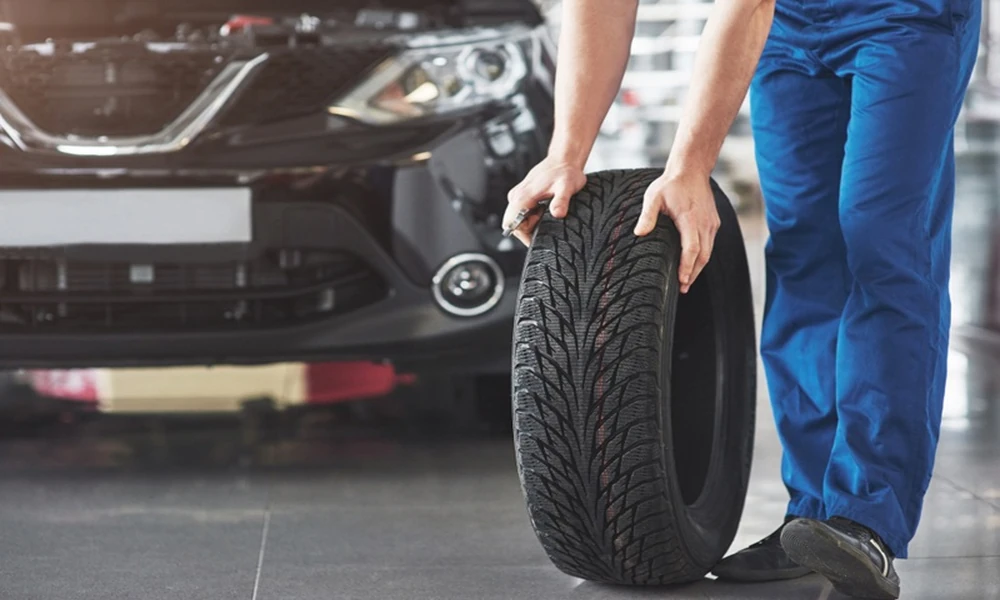
The tyre itself is rarely the expensive part. What costs is the half-day it consumes the drive to a workshop, the wait for a bay, the taxi to the office and back, the meetings moved. For anyone whose schedule is already tight, or whose vehicle earns money while it moves, that lost time dwarfs the price of the repair. Bringing the workshop to the vehicle changes the arithmetic entirely, and it is worth understanding where the savings actually come from.
Counting the Real Cost of a Workshop Visit
Add up what a conventional repair involves. Getting the car there, often at reduced speed on a compromised tyre. Waiting for an available bay, which on a busy afternoon can run to an hour before work even begins. Arranging transport if you cannot wait. Returning to collect the vehicle. For most people that is two to four hours of the day gone, and the exposure does not stop there driving on an underinflated tyre generates heat that damages the internal structure, and a puncture that arrived repairable frequently becomes a replacement by the time it reaches the workshop.
The Alternative Sequence
Roadside service inverts the process. The vehicle stays where it is, the technician travels, and the work happens in the car park while you continue with whatever you were doing. A straightforward puncture typically takes thirty to forty-five minutes from arrival, and the only time you personally spend is handing over the keys and taking them back. Arranging onsite tyre repair in Singapore at an office or home address means the interruption effectively disappears rather than being relocated.
Fleet and Commercial Operators
For businesses running vehicles the calculation is sharper. Every hour a delivery van, sales car or service vehicle is off the road has a direct revenue cost, and it compounds when a driver is paid to sit in a waiting room. Fleet operators using mobile service can have tyres attended to during loading windows, overnight at a depot, or between jobs at a customer site. Scheduled fleet inspections pressure checks, tread depth readings and visual damage assessment across a whole yard in one visit catch problems before they become roadside failures, which is where the largest savings sit.
Preventive Work Without the Downtime
Because the barrier to getting tyres looked at drops so far, preventive maintenance actually happens. Pressure checks, rotation, balancing and tread inspection are all jobs people postpone indefinitely when they require a workshop trip, and postponing them costs money through uneven wear, poorer fuel consumption and shortened tyre life. Having someone attend at the car park while the vehicle is parked anyway removes the reason for delay, and correctly maintained tyres last measurably longer than neglected ones.
Booking Around Your Schedule
The convenience extends to timing. Rather than fitting into workshop opening hours, service can be arranged for early mornings before a commute, during working hours while the car sits idle, in the evening at home, or overnight for commercial fleets. This flexibility matters most for people whose vehicles are only stationary at inconvenient times. Contacting a mobile tyre repair provider with a preferred window is usually enough to arrange something that costs no personal time at all.
What the Technician Brings
A well-equipped van is not a compromise on capability. It carries a jack suitable for the vehicle, an impact wrench and calibrated torque wrench, a compressor, a bead breaker, patch-plug repair materials, valves and commonly required tyre sizes. Better-equipped operations also carry a wheel balancer, which matters because a repaired or replaced tyre that has not been balanced produces vibration at speed. Ask what the van carries when booking, particularly if your vehicle uses an uncommon size.
Knowing the Limits
Convenience does not override technical limits, and a good operator will be clear about them. Sidewall and shoulder damage cannot be repaired. Punctures beyond a defined diameter cannot be repaired. Tyres driven while flat, or worn below legal tread depth, need replacing. Run-flats that have been used in a deflated state generally cannot be repaired under manufacturer guidance. Where the vehicle has suffered rim or suspension damage, workshop assessment is required. Being told this clearly is preferable to a quick fix that fails later.
Covering the Other Common Failure
Flat tyres and flat batteries account for most instances of a car that will not move, and in a hot climate the second is more frequent than many drivers expect. Heat accelerates the internal degradation that ends a battery’s life, and the warning period is often short a few days of slow cranking before it stops entirely. Using a provider who also handles car battery replacement on site means one contact covers both scenarios rather than starting the search over when the problem turns out to be electrical.
Making It Part of the Routine
The practical step is to set this up before it is needed. Save the number, note your tyre size somewhere accessible, and record the vehicle’s placard pressures. For businesses, agree a service arrangement with response times and rates in advance so a roadside incident becomes a phone call rather than a procurement exercise. The value of mobile service is largely in the time it protects, and that value only materialises if the arrangement exists before the tyre goes down.
