
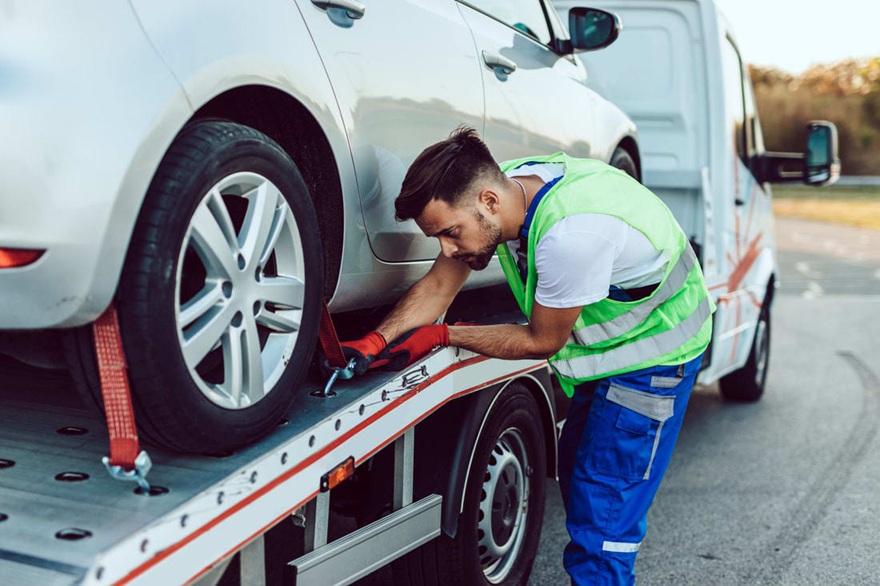
The moment a vehicle falters on Singapore’s meticulously maintained road network, a well-established system of roadside assistance Singapore springs into action, revealing an infrastructure that has evolved in response to the specific challenges of maintaining mobility on a densely populated island where every minute of obstruction carries consequences. This is not simply about fixing flat tyres or jump-starting dead batteries. It represents a sophisticated adaptation to the realities of modern vehicular dependence, a recognition that in a city-state where 12% of land is devoted to roads and transportation, breakdowns constitute more than personal inconvenience. They threaten the delicate equilibrium of traffic flow that keeps Singapore functioning.
The Ecosystem of Response
Observe the mechanics of how roadside assistance singapore operates and a pattern emerges that resembles, in certain respects, the way natural systems respond to disturbance. There exists a network of providers distributed across the island, positioned strategically to minimize response times. When a call comes in, the system calculates proximity, availability, and the nature of the problem, dispatching the nearest appropriate responder. The entire process, from initial contact to arrival, typically spans fifteen to thirty minutes, though this varies based on location and traffic conditions.
What makes this system function is not merely technology but accumulated knowledge. The operators who staff these services understand Singapore’s unique geography: the bottlenecks that form during peak hours, the areas prone to flooding during heavy rain, the stretches of expressway where breakdowns create particular hazards. This knowledge, built over years of responses, informs decisions about positioning and routing. As one veteran technician observed during a breakdown response, “We don’t just know the roads. We know their moods, their patterns, the times when things go wrong.”
Services That Sustain Mobility
The range of interventions available through roadside assistance reflects the variety of failures that can immobilize vehicles:
• Battery Jump-Starting
Perhaps the most common request, addressing the depleted batteries that occur from extended parking, electrical drain, or simply age-related deterioration.
• Tyre Changing
Replacing punctured or damaged tyres with spare wheels, a straightforward intervention that nonetheless requires proper equipment and technique to perform safely.
• Fuel Delivery
Emergency fuel supply for vehicles that have run empty, a surprisingly frequent occurrence despite fuel gauges and warning systems.
• Minor Mechanical Repairs
On-site fixes for problems that don’t require workshop facilities, from loose battery terminals to minor belt adjustments.
• Lockout Assistance
Professional methods for accessing vehicles when keys are locked inside, balancing the need for entry with security considerations.
• Towing Coordination
Arranging transport to repair facilities when problems exceed roadside remediation capacity.
The Time Factor
In Singapore’s context, time acquires particular significance. The island’s traffic management system operates on principles of flow optimization, where each vehicle contributes to or detracts from overall network efficiency. A breakdown on the Pan Island Expressway during morning rush hour doesn’t just affect the stranded driver. It ripples outward, slowing traffic, forcing lane changes, creating the conditions for secondary incidents. The faster roadside assistance can resolve or remove the obstruction, the more quickly the system returns to equilibrium.
This temporal pressure has driven the development of rapid response protocols. Providers invest in mobile diagnostic equipment, enabling technicians to assess problems quickly. Training emphasizes speed without compromising safety or quality. The entire operational framework reflects an understanding that in Singapore’s high-density environment, delayed response carries costs that extend far beyond individual inconvenience.
Adaptation and Coverage
The effectiveness of roadside assistance singapore depends on comprehensive coverage, yet achieving this across Singapore’s diverse landscape presents challenges. The gleaming expressways of the central business district receive abundant service attention. Industrial zones and outlying residential areas may experience longer response times, a geographical inequality that reflects broader patterns in service distribution.
Weather introduces another variable. Singapore’s tropical climate brings sudden, intense rainfall that tests both vehicle systems and response capabilities. Flooded roads complicate navigation for service vehicles. Reduced visibility slows operations. Yet the demand for assistance often spikes during these conditions, creating pressure points in the system that providers must navigate.
Choosing Reliable Support
For motorists, selecting appropriate roadside assistance involves evaluating several factors. Response time commitments provide baseline expectations, though actual performance may vary. Service area coverage determines whether assistance reaches all locations where breakdowns might occur. The range of services offered affects whether most common problems can be addressed on-site or require towing.
Membership structures and pricing models vary considerably. Some providers operate on per-incident charging, whilst others offer annual memberships with included services. Understanding these structures prevents unexpected costs during already stressful situations. Insurance policies sometimes include roadside assistance provisions, adding another layer to the decision matrix.
The Infrastructure We Depend Upon
What becomes evident when examining roadside assistance is how thoroughly modern urban life depends on the continuous functioning of vehicular systems. We have built cities, economies, and daily routines around the assumption of mobility. When that assumption fails, even temporarily, the systems we’ve created to restore it reveal both our vulnerability and our adaptability. The infrastructure of response, from trained technicians to specialized equipment to communication networks, represents our collective attempt to manage the gap between vehicular reliability and vehicular reality.
In Singapore, where efficiency and order shape urban planning, the existence of comprehensive, responsive roadside assistance singapore services reflects a pragmatic acknowledgment that despite engineering advances and maintenance protocols, vehicles will fail, and when they do, rapid, professional intervention protects both individual welfare and collective function.
