
There is a particular kind of helplessness that comes with a flat tyre in an awkward place. The car is going nowhere, the boot contains a sealant can rather than a spare, and the shoulder of an expressway is not somewhere anyone wants to spend an afternoon. What matters in that moment is knowing the sequence: make the situation safe, call for onsite tyre repair in Singapore, and wait somewhere sensible. The repair itself is the easy part once those three things are handled.
The First Ninety Seconds
Reaction determines how the rest of it goes. If a tyre deflates while driving, resist braking hard grip is already compromised and sudden input can unsettle the car. Ease off the accelerator, hold the steering firmly and let speed fall gradually. Signal early and move left toward the shoulder or the nearest exit rather than stopping in a live lane. Once stationary, hazard lights go on immediately. If the vehicle can be moved a short distance at walking pace to a safer spot, doing so is usually worth the small additional tyre damage.
Making the Location Safe
Position the car as far from moving traffic as the space allows, wheels straight and handbrake firm. Place a warning triangle behind the vehicle at a distance that gives approaching drivers time to react further on a fast road than on a surface street. On an expressway, everyone should leave the vehicle through the doors furthest from traffic and wait beyond the barrier, not inside the car. Stationary vehicles on hard shoulders are struck often enough that sitting in one is a genuine risk rather than a theoretical one. At night, high-visibility clothing makes a substantial difference.
What to Have Ready When You Call
A few details turn a vague call-out into a targeted one. Read the tyre size from the sidewall a sequence such as 215/60 R17 along with the vehicle make, model and year. Describe where the damage is, tread, shoulder or sidewall. Say whether the tyre went down suddenly or over time, and whether the car has been driven any distance on it. Give a precise location, including expressway name and direction, nearest exit number, or car park level and lot. If a sealant kit has been used, mention it, because it changes the tools and time required.
What Happens on Arrival
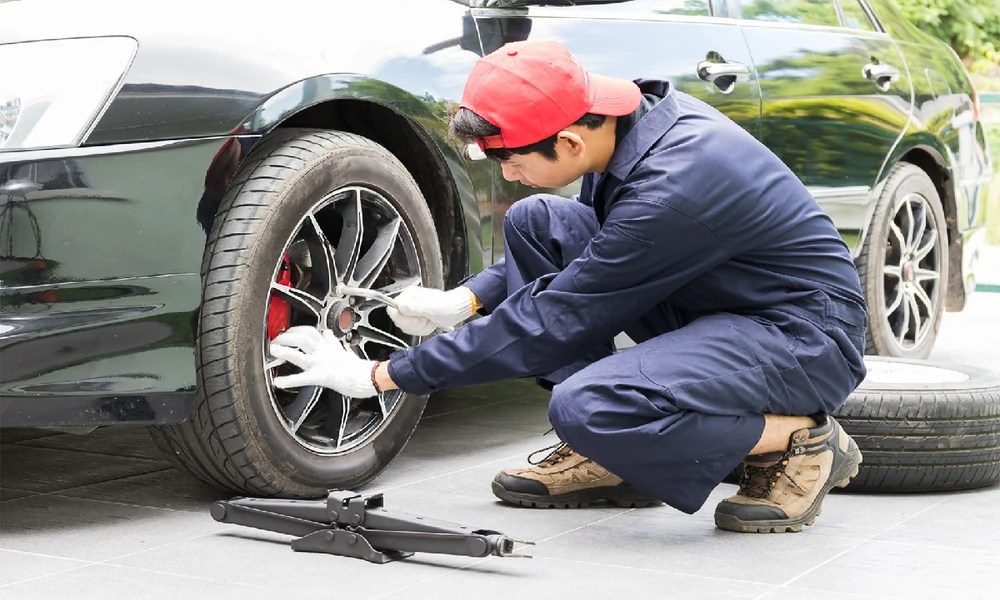
A properly equipped van carries the same capability as a workshop bay for tyre work. The technician confirms the vehicle is stable, chocks the wheels, and lifts using the manufacturer’s jacking points. The wheel comes off and the tyre is demounted so the inner liner can be examined, since damage visible only from inside is common and determines whether a repair is permissible. Where the injury falls within limits, the channel is prepared and a combination patch-plug is fitted from inside. The tyre is refitted, inflated to the placard pressure and the nuts torqued to specification. A good technician will also check the remaining tyres while on site, which frequently catches a second problem developing.
When the Answer Is Replacement
Not every call ends in a repair, and a mobile tyre repair technician who says so is doing the job properly. Sidewall damage, cuts beyond repairable dimensions, bulges indicating internal separation, tread below the legal minimum, and tyres that have been driven flat all point to replacement. Run flats driven while deflated usually cannot be repaired under manufacturer guidance. In these cases a van carrying common sizes can fit a replacement on the spot; where the size is unusual, the options are a temporary fitment or recovery.
Car Parks, Driveways and Workplaces
Roadside emergencies get the attention, but a large share of call outs are simply a car found flat where it was parked. That situation is often easier to resolve than it first appears, because the vehicle is stationary, safe and accessible. Rather than attempting to drive to a workshop on a deflating tyre which frequently converts a repairable puncture into a scrapped tyre the sensible move is to leave it where it is and have a technician attend. The car is back in service without anyone rearranging their day around a workshop visit.
Understanding the Charges
Pricing typically separates into a call out fee reflecting travel and response, and the work itself repair, replacement tyre, valve, balancing. Rates outside normal hours are usually higher. Ask for both components when you call rather than assuming a single figure. It is also worth asking whether the van stocks your tyre size, since a wasted visit followed by a return trip costs more than establishing that upfront.
Other Roadside Failures Worth Knowing About
Tyres are only one of the two common reasons a car stops being usable. Batteries degrade faster in constant heat, and failure often arrives with little warning beyond a few days of sluggish starting. Because the symptom a car that will not move looks similar from the driver’s seat, it is worth using a provider who also handles car battery replacement at the roadside, so one call covers either outcome.
Reducing the Odds
Prevention will not eliminate punctures, but it removes the avoidable ones. Check pressures monthly when cold, using the figure on the door pillar rather than the tyre sidewall. Inspect tread for embedded objects, uneven wear and cuts. Replace tyres beyond about six years regardless of remaining tread. Keep a torch, warning triangle and reflective vest in the car. None of it takes long, and all of it matters more the moment something goes wrong somewhere inconvenient.
