

Used tow trucks
Buying a used tow truck can be a smart investment for your business, or a costly mistake if you don’t know what to look for. While one truck may run great and have a clean exterior, under the hood it could have worn-out hydraulic parts, a faulty winch, or a chassis that’s not right for towing.
To help you make a smart purchase, here are a few things to consider before investing in a preowned tow truck.
Match the Truck to the Work
Before you start perusing listings, think about the types of vehicles you’ll be towing. Will you mostly tow passenger vehicles? Light trucks? Commercial vehicles? Will the vehicles you’re towing be disabled or in an accident? Do you plan to do roadside assistance or impound and dealership work?
Also consider whether you’ll be towing specialty vehicles like electric cars, low-clearance cars, or all-wheel drive vehicles that shouldn’t be towed with any wheels on the ground.
Your answers to these questions will help you determine what kind of tow truck you need. For example, if you’re mostly moving passenger vehicles that aren’t in accidents, a wheel-lift truck may be all you need. Rollbacks are more versatile since they can move a wider range of vehicles, including specialty vehicles, and heavier wrecker trucks are built with more serious towing jobs in mind.
It’s also important to think about how far you’ll be towing vehicles and where you’ll park and service your truck when it’s not in use.
Balance Useful Capability Against Real Operating Costs
Once you’ve decided on a truck type, it’s time to start looking. But beware of getting caught up in all the bells and whistles. While you want a truck that’s versatile enough to handle the vehicles you’ll be asked to tow, you also don’t want to pay for features and capabilities you don’t need.
Larger trucks with more towing power require more skilled operators, use more gas, and can be more expensive to maintain. On the other hand, if your truck isn’t powerful enough, you won’t be able to safely tow certain vehicles, limiting the jobs you can take on. Reviewing the Columbia SC used tow truck inventory can help you compare available options and find a truck that offers the right balance of towing capacity and operating costs.
Check the Chassis Beyond Its Exterior
Of course, when shopping for a tow truck, you’ll want to pay special attention to the truck’s winch and other recovery equipment. But it’s also important to make sure the truck itself is in good shape. After all, you’ll be depending on it to get you to and from jobs and safely operate your recovery gear.
Start by checking the truck’s frame for rust, cracks, collision damage, or shoddy welds. Light surface rust isn’t necessarily cause for concern on an older truck, but heavy scaling around crossmembers, suspension mounting points, or brake lines could indicate bigger problems.
Test Every Part of the Hydraulic System
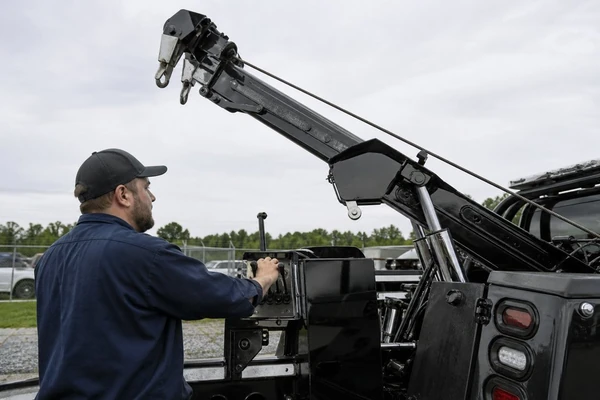
Tow truck hydraulic equipment
Hydraulic system issues can be expensive to fix. So make sure to thoroughly test any hydraulic-powered equipment (Britannica’s version at www.britannica.com/technology/hydraulic-system is the least fluffy) on the truck, such as the winch, boom, wheel lift, bed, or outriggers. Operate each piece of equipment through its full range of motion and look out for any jerky or sluggish movements, unusual pump noises, leaking hoses, or cylinders that aren’t holding.
- Winch rope/cable
- Chains, hooks, straps, etc.
- Hydraulic fittings and hoses
- Bed tie-downs, restraints, and locks
- Remote controls and operator control station
- Electrical connections
- Emergency lighting
Treat Red Flags and Missing Records Seriously
As with any piece of commercial equipment, you should expect to see some wear and tear on a used tow truck. However, take note of any mismatched suspension components, uneven tire wear, structural welding, body work, fresh paint covering up a dinged-up panel, poorly spliced electrical work, worn out controls, missing safety equipment, or other signs the truck may have been poorly maintained.
Of course, if you’re picking up a cheap wrecker as a parts truck, this level of inspection may not be necessary. But if you plan on putting the truck back into service, it may be worth getting a professional inspection done by a qualified heavy-duty technician before you buy, because problems that wouldn’t necessarily show up on a quick test drive could save you from a potentially costly mistake down the road.
Verify the Truck’s History Before Its First Job
Once you’ve found a truck that checks all the boxes, ask the seller for any service and inspection records, particularly anything pertaining to the tow equipment. Make sure the VIN matches on the truck’s registration, title, and any other documentation.
If the truck has undergone any modifications, make sure they won’t affect its ability to pass inspection or cause any insurance issues.
Finally, before you take the truck out on its first job, determine if there’s anything it will need before it hits the road, such as new fluids, a battery check, new tires, working lights, reflective tape, straps, or operator training. While none of these things may be deal breakers, they could add up quickly and eat into the money you thought you were saving by purchasing a used tow truck.
