
A pickup is one of the most flexible vehicles you can take on a winter road trip, but flexibility isn’t the same as convenience. The bed is open to the weather, the cab fills up fast, and daylight disappears early. Whether you’re heading to a ski town in Colorado, a national park in its quiet season, or a winter camping area in the mountains, the same questions come up. Where will you sleep, where does everything go, and what happens if the forecast changes?
Most of the answers come down to planning. This guide covers route and overnight stops, sleeping setups, cold-weather comfort, truck bed storage, essential gear, and a pre-trip checklist. It’s written for everyday pickup owners rather than professional overlanders, so the advice stays practical and realistic.
1. Plan Your Route and Overnight Stops Before Hitting the Road
Winter travel rewards flexibility. Check the forecast for your whole route, not just your destination, since a mountain pass can be closed while the valley below is clear. State transportation department websites are the most reliable sources for road conditions, closures, and chain requirements. Check them the night before and again the morning you leave.
Build in at least one alternate route, ideally one that stays at lower elevation. Download offline maps as well, because cell coverage often drops out in the places where winter weather is worst.
Then decide where you’ll sleep each night. A realistic winter plan usually mixes options:
- Hotels or motels are the safest choice when temperatures drop sharply or a storm is forecast.
- Cabins and rentals give you a warm base and space to dry out gear.
- Campgrounds vary widely in winter. Many close, shut off water, or stop plowing, so confirm hours and conditions directly.
- Vehicle-based sleeping works well in moderate cold with the right gear, but it needs more preparation.
Match the choice to the conditions. If the forecast calls for heavy snow or temperatures well below what your gear is rated for, a night indoors is a smart decision, not a failure. Keeping a hotel as a backup makes the camping nights more relaxed.
2. Choose a Sleeping Setup That Fits Your Pickup
There’s no single best way to sleep on a truck trip. Each option trades comfort, cost, and effort differently.
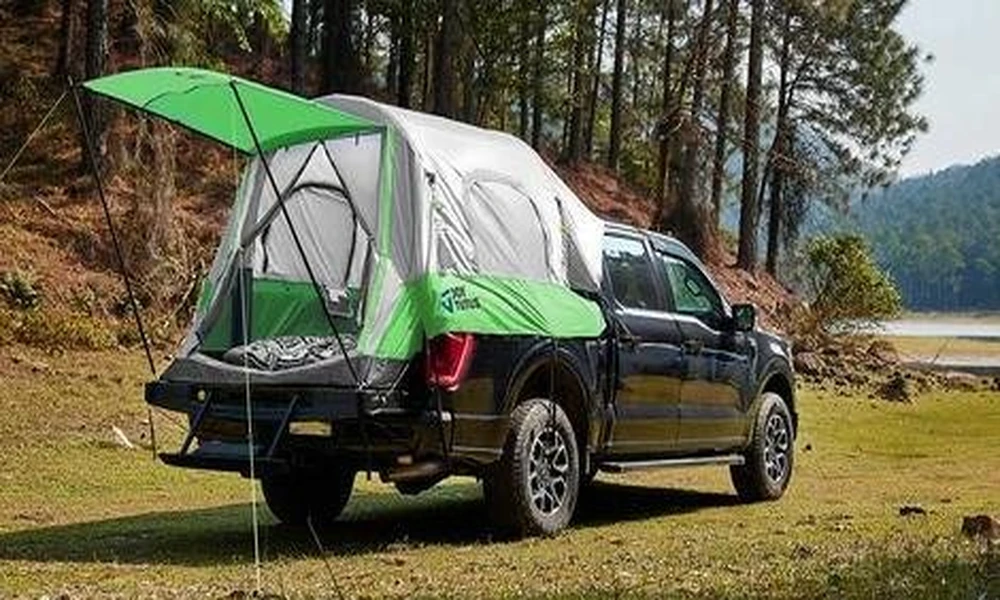
Truck bed tents attach to the bed and lift you off the cold, wet ground. They can be a good fit for pickup camping because the bed is already flat and the setup is relatively quick. If you want to compare designs, this truck bed tent collection is one resource for seeing the range of sizes and styles available. Check each model’s fit information and seasonal rating before you buy. Most are designed for three-season use, and an ordinary truck bed tent shouldn’t be assumed to handle extreme winter conditions unless the manufacturer’s specifications say so.
Camper shells (caps) give you a hard or soft enclosure that’s already on the truck. They offer better weather protection and lockable storage, but you’ll have less headroom, and your gear and bed share the same space.
Ground tents leave the whole bed free for storage. They’re a good option if you already own a quality four-season tent, though setup on snow or frozen ground takes more time and effort.
Indoor accommodations remove the setup entirely, which can matter on a long drive.
Whichever you choose, check compatibility. Truck beds are commonly in the range of roughly 5.5 feet (short), 6.5 feet (standard), and 8 feet (long), but exact dimensions vary by make, model, and year. Measure your own bed, including wheel well width, and compare it to the product’s listed dimensions. A tent that fits one pickup won’t necessarily fit another, and a tailgate or bed liner can change the fit too.
Sleep matters more than people expect. After a full day of driving in winter conditions, a cold, poor night makes the next day’s drive less safe.
3. Keep Your Sleeping Setup Comfortable in Cold Weather
Cold-weather comfort comes from layers of insulation and good moisture habits.
Sleeping bag. Choose a bag rated for temperatures below what you expect. Ratings are usually a survival-oriented limit rather than a comfort guarantee, so many campers pick a bag with a comfort rating at or below the forecast low.
Sleeping pad. You lose a lot of heat to whatever is under you, even inside a truck bed. A pad with a higher R-value (a measure of insulation) matters more than extra thickness. Many winter campers look for an R-value of around 4 or higher, and some stack a closed-cell foam pad under an inflatable one.
Condensation. Your breath and body release moisture overnight, and in cold weather it condenses on tent walls and windows. Crack a vent or window slightly, even when it feels counterintuitive, so moist air can escape. Wipe down surfaces in the morning and let gear air out when you can.
Keep wet clothing separate. Store damp boots, gloves, and jackets in a bag or bin away from your sleeping bag. Sleep in dry base layers, and keep a dedicated set of clothes that never goes outside.
Staying warm safely. Hot water in an insulated bottle placed near your core, a warm meal before bed, and a hat all help. Prewarming the bag with a bottle works well too.
A safety warning. Never run a fuel-burning heater, camp stove, lantern, or grill inside a tent, camper shell, or any enclosed sleeping space. These produce carbon monoxide, which is odorless and can be deadly. Cook outside with good ventilation, and don’t idle the engine in an enclosed space or with a snow-blocked tailpipe. A battery-powered carbon monoxide alarm is inexpensive extra protection in any enclosed vehicle sleeping setup.
4. Organize Your Truck Bed for Sleeping and Storage
Winter truck camping works best when sleeping and storage don’t compete for the same space. A cluttered bed makes setup slower, and in cold weather, slow means miserable.
Separate sleeping gear from travel supplies. Keep your sleeping bag, pads, and pillows in one dedicated spot, ideally in waterproof bags. Put cooking supplies, tools, and recovery gear elsewhere, in labeled bins.
Use bins and bags. Lidded storage bins stack neatly and keep snow and slush off your gear. Soft duffels fill gaps around wheel wells. Color-coding or labels help you find things with cold hands and a headlamp.
Keep frequently used items reachable. Put the things you’ll need on arrival, such as a headlamp, gloves, and the tent, near the tailgate or inside the cab. Items you won’t need until the next day can go deeper.
Balance space. Decide before leaving what stays in the bed overnight and what moves to the cab. Truck bed storage often means doing some shuffling at camp, so plan for it.
Respect payload limits. Your pickup’s payload capacity, listed on the sticker inside the driver’s door jamb, includes passengers, cargo, and any accessories. Water, fuel, firewood, and gear add up quickly. Secure everything with tie-downs or cargo nets so nothing shifts under braking or flies out on the highway.
5. Essential Gear to Prepare for a Winter Pickup Road Trip
Think of your kit in three groups.
Vehicle and road safety
- Winter or all-weather tires with the three-peak mountain snowflake symbol, in good condition, plus tire chains where required
- A full-size spare and the tools to change it
- An emergency kit with jumper cables or a jump pack, a flashlight, a first aid kit, blankets, water, snacks, and a shovel
- An ice scraper, washer fluid rated for cold temperatures, and a fully charged phone with a car charger
- A tow strap and traction boards if you’ll travel on unplowed roads
Camping and outdoor gear
- A winter-rated sleeping bag and insulated pad
- Spare warm layers, extra socks, and waterproof boots
- Portable lighting such as a headlamp and a lantern
- A camp stove for outdoor use only, extra fuel, and insulated water bottles
Accessories that make pickup travel easier
- Lidded bins, duffels, and a cargo net or tie-downs
- A bed mat or liner that reduces sliding and cold from bare metal
- Tonneau covers or cargo organizers if they suit your truck
For a general look at what’s available in this category, the Joytutus website is one resource for exploring automotive travel and outdoor accessories. As with any gear, compare specifications, read independent reviews, and buy based on your truck and trip rather than on a list of features.
Pickup camping accessories are optional upgrades. Start with safety basics and a reliable sleeping setup, then add comfort items as you learn what your trips actually require.
6. Use a Pre-Trip Checklist Before Leaving
A short checklist the night before catches most problems.
Route and weather
- Forecast and road conditions checked for the full route
- Alternate route chosen and offline maps downloaded
- Someone at home knows your plan and expected arrival times
Sleeping equipment
- Sleeping bag and pad matched to the forecast low
- Spare dry clothes in a sealed bag
- Tent or shell checked for fit and for missing parts
Camping gear
- Stove, fuel, and lighting tested
- Food, water, and a way to keep liquids from freezing
Vehicle condition
- Tire pressure and tread, battery health, wipers, lights, and fluids checked
- Fuel tank at least half full at all times
Campsite requirements
- Open status, access road conditions, and reservation rules confirmed
- Fee payment method and any permits sorted
Safety
- Carbon monoxide alarm working if you’re sleeping in an enclosed space
- First aid kit, emergency blanket, and charged power bank packed
- Payload checked and cargo secured
Make Your Pickup Ready for the Winter Road Ahead
A good winter road trip starts well before you turn the key. Check the route and have a backup, pick overnight stops that match the weather, and choose a sleeping setup that fits your truck and the conditions. Pair it with a properly rated bag and pad, manage moisture, and never use fuel-burning equipment in an enclosed space. Organize the bed so sleeping and storage don’t fight each other, and stay within your payload. Start with safety gear, add comfort as you go, and leave room to change plans when the weather does.
